
TALGIC Solar System Floor Puzzle - 70 JUMBO Pieces for Kids
· Everyday Family Finds
As an Amazon Associate we earn from qualifying purchases, at no extra cost to you.
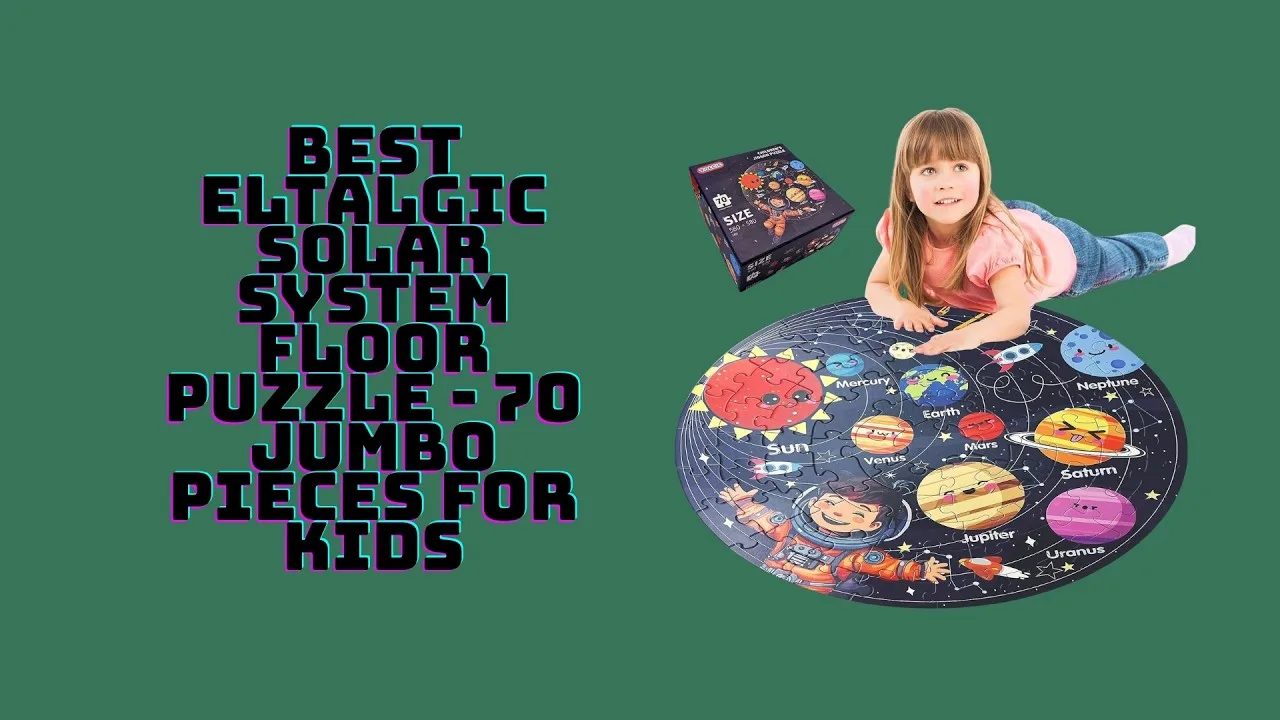
The TALGIC Jumbo Floor Puzzle is a 70-piece round jigsaw puzzle designed for kids around ages 4 to 6, featuring illustrated planets and space imagery across a circular solar system layout. Reviewed by Everyday Family Finds, it earns a genuine recommendation as a sturdy, non-toxic floor activity that makes learning feel like play.
What You’re Actually Getting
This is a large, circular puzzle that depicts the full solar system once assembled. The round format isn’t just a gimmick. It mirrors the way the solar system actually looks spatially, so when kids finish it, they’re looking at something that makes real visual sense. The illustrated planets are vibrant and detailed, and the finished image is, honestly, cool enough that you won’t mind leaving it on the floor for a while.
The piece count sits at 70, which is a solid challenge for the 4 to 6 age range. Not so few that it’s done in five minutes, not so many that kids lose interest before it comes together.
What Stood Out During the Review
Two things came up right away. First, the materials. CJ and Morganne noted that the pieces are sturdy and made from non-toxic materials, which matters a lot with kids in that younger bracket. A four-year-old is going to handle pieces roughly, maybe put one in their mouth, and the last thing a parent needs to worry about is whether the puzzle is safe. This one clears that bar without any stress.
Second, it works really well as a group activity. Spread the pieces out on the floor and multiple kids can work on different sections at the same time. Everyone finds their corner, literally, and the collaborative aspect keeps the energy up longer than a solo activity might.
The learning side of it happens without kids realizing it. They start to notice where planets sit in relation to each other. Spatial awareness builds naturally. And because it feels like play rather than instruction, kids stay curious. The review specifically mentioned kids walking away asking questions about the universe, which is exactly the kind of outcome a parent hopes for from a toy.
Who This Is Really For
This is a strong pick if you have a kid in the 4 to 6 range who has any interest in space. It also works for households with multiple young kids, since it scales well as a shared floor activity. Occupational therapist perspective from Morganne: the visual perception and spatial reasoning benefits are real, and they come without any setup or coaching from a parent.
If you’re buying for a child who’s easily frustrated by complex tasks, 70 pieces might require some patient company the first time through. But that’s also an opportunity to sit down together, which isn’t a bad thing.
Honest Closing Take
There’s no shortage of puzzles out there, but this one has a specific combination of things going for it. The round solar system design is genuinely distinctive. The non-toxic, sturdy construction holds up to the 4 to 6 crowd. And it teaches real spatial and planetary concepts while kids are just having fun. Everyday Family Finds placed it in the regular activity rotation, and based on the script, it earns that spot.
Common questions
- What age range is the TALGIC Solar System Floor Puzzle designed for?
- The puzzle is designed for kids roughly ages 4 through 6. It has 70 pieces, which is a suitable challenge for that age group without being overwhelming.
- Are the puzzle pieces safe for young children?
- According to the review, the pieces are sturdy and made from non-toxic materials, so handling them roughly or mouthing a piece is not a safety concern for kids in the 4 to 6 range.
- Can more than one child work on this puzzle at the same time?
- Yes. The review specifically noted it works well as a group floor activity, with kids able to spread out and each work on different sections they recognize.
- What does a child actually learn from this puzzle?
- Kids pick up an understanding of where the planets sit in relation to each other, and they build spatial awareness naturally while playing. The review described it as feeling like play rather than a lesson.